The Politics of Diagnosis: Endometriosis, Recognition, and Care
Research on diagnostic trajectories of endometriosis and biological citizenship in Peru.
My research examines how gendered assumptions and persistent knowledge gaps within medicine shape the recognition, diagnosis, and treatment of pain in women in Peru. I focus on the diagnostic trajectories of women living with endometriosis, a complex and multisystem disease that has historically been reduced to a gynecological condition. This reduction has contributed to the normalization of women’s pain and to the frequent minimization of patients’ suffering within clinical encounters.
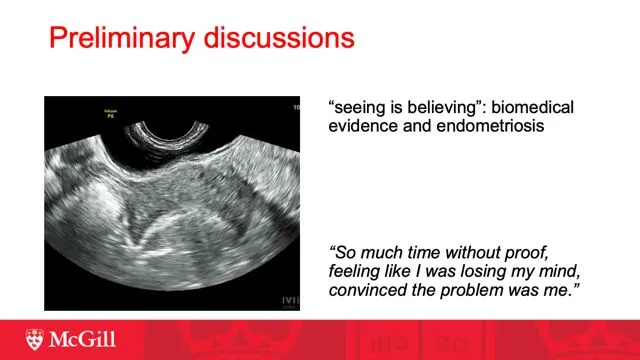
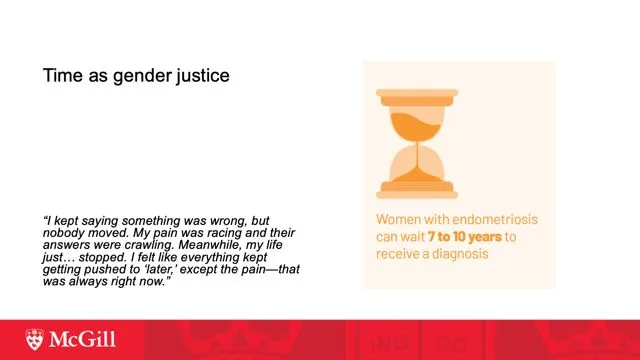
My work explores how women navigate long periods of diagnostic uncertainty. Cultural expectations that menstrual pain is “normal,” combined with medical skepticism toward symptoms that are not always visible through standard diagnostic technologies, often result in years of delayed diagnosis. These experiences reveal forms of epistemic injustice, in which women’s testimonies about their own bodies and pain are frequently questioned or dismissed.
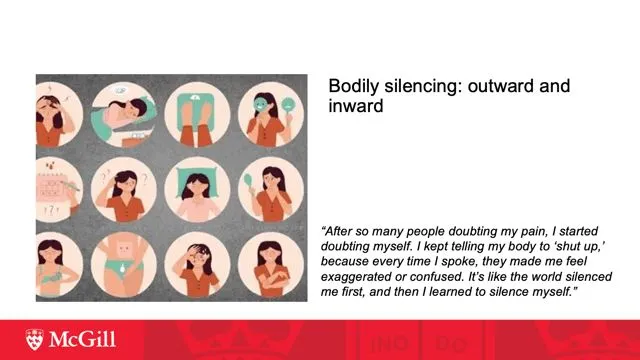
At the same time, these experiences illustrate how chronic illness is lived and negotiated through the body, highlighting the importance of embodiment in understanding how women interpret pain, care, and legitimacy in their everyday lives.
In response to the lack of recognition within biomedical systems, women increasingly organize through patient associations and support networks. These spaces function not only as communities of care but also as sites of collective knowledge production and political mobilization. In this sense, the project also examines how women living with endometriosis enact forms of biological citizenship (Petryna 2002), organizing around their health condition to demand recognition, legitimacy, and improved care within health systems.
Current Stage
In-depth interviews with women living with endometriosis in Peru. I have been conducting fieldwork in close collaboration with a national patient association, whose members have generously facilitated access to participants and shared their experiences and advocacy work. I am deeply grateful for their trust and collaboration.
The first round of interviews is currently under analysis.
Next Steps
-
Graphic Medicine Project: Beyond academic publications, the project seeks to transform this research into more accessible and collaborative forms of knowledge. One outcome will be a graphic medicine project developed together with an illustrator and with the women who participated in the interviews, translating their experiences into a visual narrative format.
-
Photovoice: In addition, the project will incorporate photovoice—a participatory method that invites participants to document aspects of their everyday lives through photography. Through this approach, women will visually portray moments, spaces, and objects that represent their experiences of living with endometriosis, creating a more intimate and embodied account of illness, care, and daily life.
-
International Collaboration: In collaboration with my colleague Dr. Karla Hernández-Swift (Texas State University), we are also beginning to explore the expansion of this research with Latina populations in the United States, examining how diagnostic inequalities and experiences of chronic pain travel across different health systems and sociocultural contexts.